A strawberry tea that still tastes like tea
Keep fruit, sweetness and dilution in separate steps.
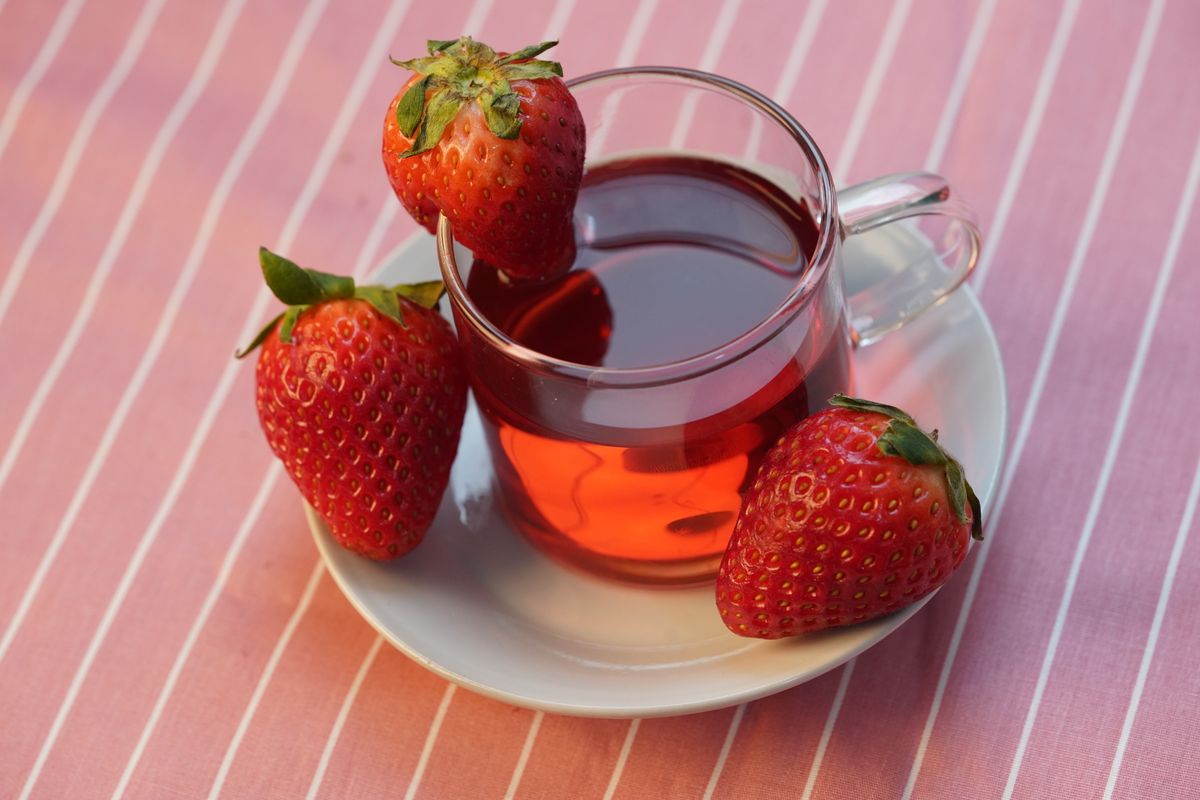
Illustrative stock photograph · hartono subagio / Pexels · Photo credits
From ingredients to your next cup.
Follow the sequence. Select a step to read its full instructions.
- 01Prepare fruitRinse, hull and weigh usable strawberries
- 02Brew & coolUse the exact tea label; measure the cooled tea
- 03Mash or strainChoose pulp level before sweetening
- 04Mix & tasteCombine fruit and tea; add syrup gradually
- 05CompareKeep tea and ice fixed while adjusting fruit
All sections in this guide
A flexible starting ratio
Set out 160 ml cooled tea brewed according to its label, 50 g washed and hulled strawberries, 5–10 ml simple syrup and 60 g ice. This proposed formula has not been kitchen-tested. Choose sound fruit and clean equipment; fruit quality affects the result more than a fixed sweetness target.
Wash, measure and prepare the fruit
Wash your hands and clean the knife, board and strainer. The FDA recommends rinsing produce under running water rather than washing it with soap. Remove damaged portions and hull the strawberries after rinsing.
Weigh the usable fruit, not the discarded tops. A small blender needs enough material to reach its blades; for a single glass, a fork and a narrow bowl may be more practical. Keep the fruit base separate until the tea has cooled, so you can compare tea strength and fruit intensity independently.
Make a smooth fruit base
Mash or blend the berries in a separate vessel. Pass through a fine strainer if you prefer less pulp. Do not add all the syrup yet: fruit sweetness varies, and sweetening before combining removes your chance to judge the tea.
Mix before adding ice
Stir fruit into cooled tea and taste with a clean spoon. Add syrup a little at a time, then ice. Expect pulp to settle; a gentle stir before drinking is normal.
The drink should have a recognizable tea finish rather than tasting only of berry.
Troubleshooting the glass
If the drink is thin, use less ice or a more concentrated tea base next time. If it is too tart, adjust syrup in 2 ml increments instead of masking the fruit with milk. Make a single serving and drink promptly; do not use this guide to infer a fruit puree shelf life.
Choose the tea deliberately
Use a tea you already know how to brew. Black tea produces a different finish from green tea, so a substitution is a new version rather than an equivalent ingredient. Follow the temperature and time on the exact package.
If using a flavored blend, check whether it already contains fruit flavor or sweetener before adding syrup. Measure the final cooled tea volume; water lost to leaves or left in the brewing vessel should not silently change the assembly ratio. Do not judge the finished balance from a hot sample.
Pulp, clarity and substitutions
For a pulpy drink, mash the berries and keep their solids. For a clearer drink, strain the puree before mixing and record the amount recovered; strained fruit does not yield the same volume as whole fruit. Frozen strawberries are a separate variation.
Follow their package handling directions and account for any liquid released during thawing. Jam and commercial fruit syrup also bring added sugar, so do not replace fresh fruit gram for gram and keep the original syrup dose. Stir the finished drink before each comparison because fruit can settle.
A two-glass comparison
Prepare a small batch of unsweetened tea and fruit, then divide it evenly between two glasses before adding ice. Leave one unchanged and add a measured 2 ml syrup to the other. Taste with separate clean spoons.
If both lack tea character, the next trial should change tea concentration rather than sweetness. If both are too sharp, compare a different fruit batch or a small syrup adjustment. Record the fruit mass, tea identity, strained or unstrained preparation and final syrup amount.
This simple comparison is a proposed home exercise, not a tested claim about the best strawberry variety.
Sources & scope
These references support the specific preparation and handling topics described above. They do not establish that our proposed combinations have been kitchen-tested. Ingredient labels take priority.
Keep perishable ingredients refrigerated as directed. FDA guidance gives a two-hour room-temperature limit for foods needing refrigeration, or one hour above 90°F, and a refrigerator temperature of 40°F or below. This is not a validated shelf life for an assembled drink.
Keep exploring
Questions or corrections? Email the editor.