Matcha and oat milk: a smoother start
A paste-first approach to fewer dry clumps.
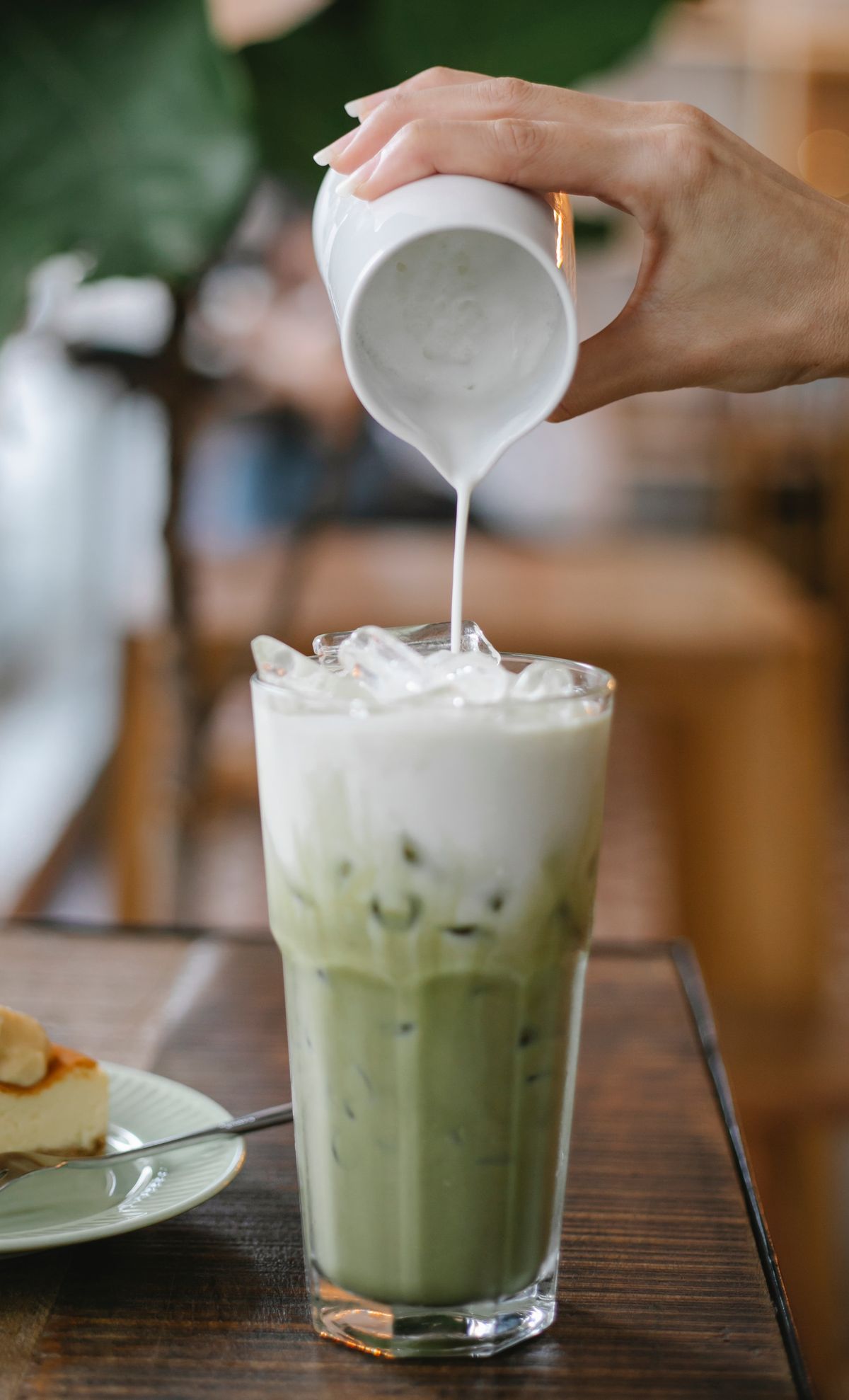
Illustrative stock photograph · Charlotte May / Pexels · Photo credits
From ingredients to your next cup.
Follow the sequence. Select a step to read its full instructions.
- 01Measure & siftWeigh powder and break dry lumps
- 02WhiskMake a smooth matcha mixture in a separate bowl
- 03Check the cartonShake as directed; note existing sweetness
- 04Cool & combineAdd oat drink before syrup and ice
- 05AdjustCompare body without changing every ingredient
All sections in this guide
Measure the components
An untested assembly starting point is 1.5 g matcha, 30 ml water, 150 ml unsweetened oat drink, 5 ml syrup and 50 g ice. Use the matcha producer’s water-temperature instructions. Check the oat drink label for ingredients and allergens; plant-based does not automatically mean allergen-free.
Set up for a small amount of powder
Use a dry fine sieve, a bowl wide enough to whisk, a small scale suitable for the dose, a measuring jug and a clean whisk. Spoon measures vary with packing and matcha texture, so keep your measurement method consistent. Break up dry lumps before adding water.
A tall drinking glass makes it harder to reach powder trapped at the bottom; prepare the matcha separately and transfer it afterward. Ippodo’s latte guidance is a useful producer reference for whisking and balancing matcha with milk, rather than evidence that our oat-drink variation was tested.
Make a paste first
Sift the powder into a bowl. Add a small portion of the water and work it into a smooth paste before adding the rest. Whisk until no pockets of dry powder remain.
A spoon can break clumps, though a whisk generally disperses powder more evenly.
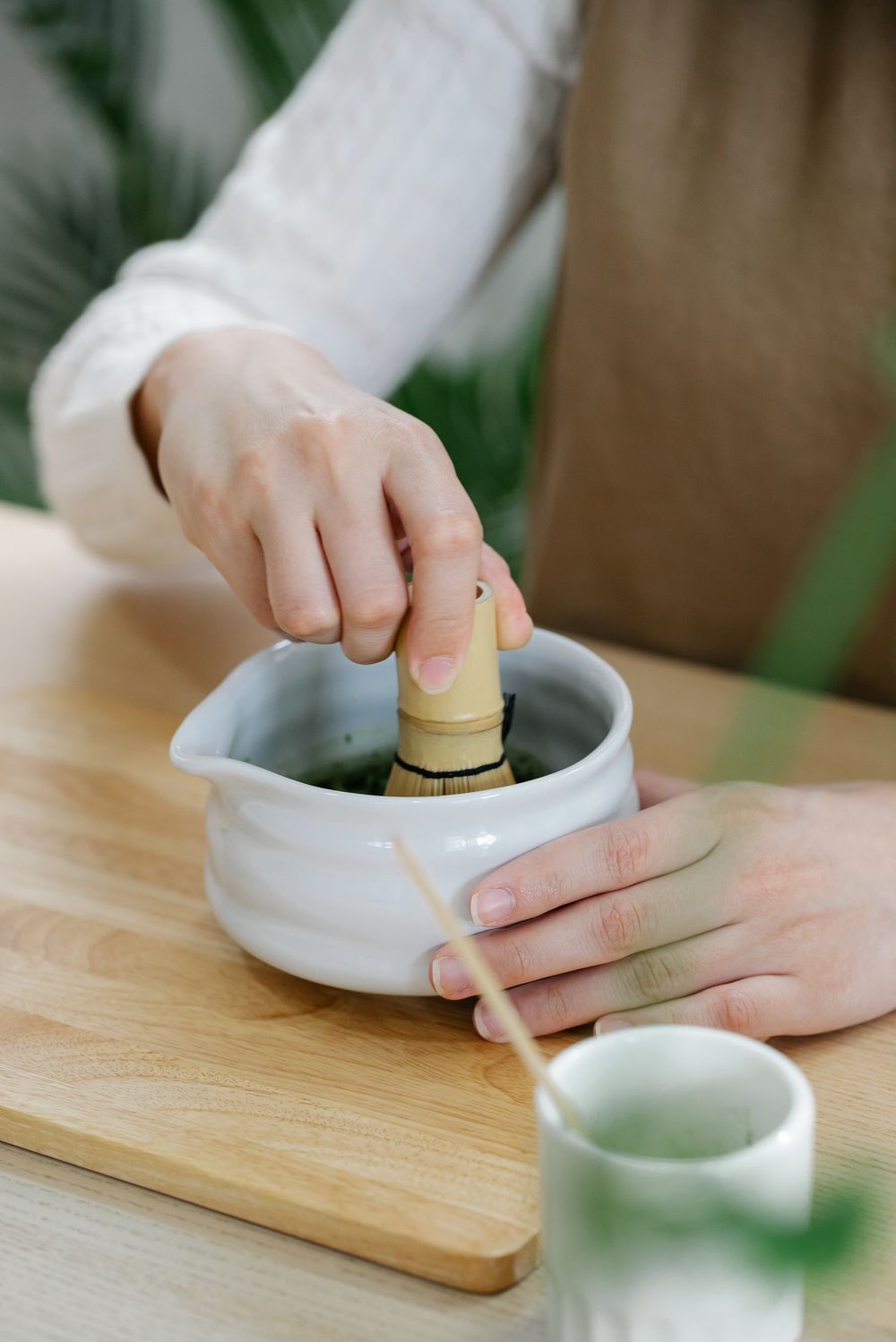
Whisk the matcha in a separate bowl to disperse dry powder.Illustrative process photograph · Anna Pou / Pexels. Equipment and ingredients may differ from this guide. Source & license
Combine gently
Cool the matcha mixture, stir in oat drink and taste before adding syrup. Add ice after mixing. Layering looks attractive but gives uneven sips; stir before drinking.
Natural settling is expected because powder is dispersed in the liquid rather than fully dissolved.
Combine the prepared matcha and oat drink; stir before drinking.Illustrative process photograph · Charlotte May / Pexels. Equipment and ingredients may differ from this guide. Source & license
Adjust texture independently
Shake the oat drink as its label directs. If the glass feels heavy, substitute 20 ml water for 20 ml oat drink next time. If the tea is harsh, review powder amount and water temperature before adding more sugar.
This is a flavor guide, not a claim about matcha health benefits.
Check the plant drink before blaming the matcha
Oat drinks differ in sweetness, oil content and texture. Read the label and shake as directed before measuring. Start with an unsweetened product if you want syrup to remain an independent variable.
A barista-style drink may give a richer result than a lighter product even when the measured volume is identical. If you are serving someone with an allergy or dietary restriction, show them the actual ingredient label. This guide does not treat a plant-based label as a guarantee of suitability.
Diagnose clumps and sediment
Dry green pockets usually call for better sifting or more thorough mixing before milk is added. Do not solve them by adding a large amount of liquid at once: the powder can become harder to reach. Sediment after standing is different from dry clumps.
Matcha particles remain dispersed rather than becoming a completely clear solution, so stir before drinking. If the drink seems harsh, compare the powder dose and producer’s water guidance before increasing syrup. Keep a note of the brand and how long the open container has been stored.
Compare a milk-forward and a lighter version
Make the same matcha preparation twice. Use the proposed 150 ml oat drink in one glass; in the other, replace 20 ml oat drink with 20 ml water. Keep syrup and ice unchanged.
Taste both after stirring, at similar temperatures. This isolates the effect of dilution better than changing powder, milk and sweetness together. For a warm variation, use equipment suited to heating and follow the oat drink’s directions; do not assume the iced assembly instructions describe a safe hot-liquid shaking method.
No nutrition or caffeine amount is calculated here.
A quick troubleshooting reference.
| What you notice | What to check next |
|---|---|
| Dry powder pockets | Sift first and mix matcha separately before adding oat drink. |
| Sediment after standing | Stir; settling is different from an unmixed dry clump. |
| Too heavy | Compare replacing 20 ml oat drink with 20 ml water. |
| Harsh flavor | Review powder dose and producer’s water guidance before more syrup. |
Sources & scope
These references support the specific preparation and handling topics described above. They do not establish that our proposed combinations have been kitchen-tested. Ingredient labels take priority.
Keep perishable ingredients refrigerated as directed. FDA guidance gives a two-hour room-temperature limit for foods needing refrigeration, or one hour above 90°F, and a refrigerator temperature of 40°F or below. This is not a validated shelf life for an assembled drink.
Keep exploring
Questions or corrections? Email the editor.